
Ecological Impact of our Dams
By Stephen Gephard
Did you know that Connecticut has the highest density of dams in the U.S.? There are over 4,000 dams in our small state, a legacy of our industrial past. These dams, many of which are less than 15 feet high, provided water-driven power for the former mills. In Middlesex County, mills along the Moodus River produced twine; mills in Higganum produced farm implements; in Chester it was hand tools; Deep River and Ivoryton: ivory based products, especially piano keys. But these dams created environmental problems that continue to plague us today.
The impact of dams
Dams block fish migrations. Salmon may have been able to jump over low dams but shad and alewives cannot jump and even a four-foot high dam stopped them. With over 4,000 dams, there is no stream in Connecticut that was not impacted and a huge amount of fish spawning habitat available in the year 1630 is no longer accessible. That drove the extinction of salmon and the decimation of runs of other species. The dams stopped the downstream flow of sediment, which rivers and Long Island Sound need. The sediment has accumulated behind many dams to the point where it has become a problem and if downstream of industrial areas, the sediment is often contaminated. The dams converted free-flowing habitat favored by trout into still and often stagnant pools favored by bullheads and non-native species. The water became warmer, with less oxygen. When these dams were used by thriving companies, they were cared for. Now, many are more-or-less abandoned or owned by people who lack the knowledge and funds to properly care for them. These small dams with full ponds offer zero flood protection but actually add to the flood risk during storms that breach poorly maintained dams and release the water behind them along with the floodwaters (like in Essex in 1982).
The benefit of dams
Some dams retain value and therefore are well-maintained. Many municipalities derive drinking water from large reservoirs behind dams. Some dams and ponds are used for fire suppression or process water for manufacturers. There are a handful of larger dams in Connecticut that produce hydroelectric. And then there are many dams that are maintained by the State, Towns, lake associations, and individuals for recreation and aesthetic purposes. If you subtracted all of those valued dams from the total, you probably still have around 3,000 dams that serve no particular purpose.

What to do?
The dam removal movement has been going strong for at least 25 years and in 2024 celebrated a huge victory with the removal of large dams on the Klamath River in northern California. Connecticut was in the forefront of this movement when it removed five dams on the Naugatuck River in the 1990s. Since then, over 25 dams have been removed, including four in the towns of the lower Connecticut River valley. Often, fishways are suggested as a solution when the dam cannot be removed. There are successful fishways in Berlin, East Haddam, Lyme, Old Lyme, and Essex. But fishways only provide a way for some fish species to get around dams while doing nothing to address the other impacts I listed in the first paragraph.

The tensions
Some dam owners like their dams and don’t want them removed while others are eager to be relieved of the burden of maintaining them and covering skyrocketing insurance premiums. But some neighbors protest owners’ plans to remove their own dams. They cling to myths such as: (1) the destruction of nature (No, one type of non-native nature is being converted to a type of generally native nature), (2) loss of flood protection (No, these small dams do not offer any flood protection), (3) there will permanent stinky mudflats (No, the old pond beds revegetate with native plants within weeks), (4) there will no longer be water in the
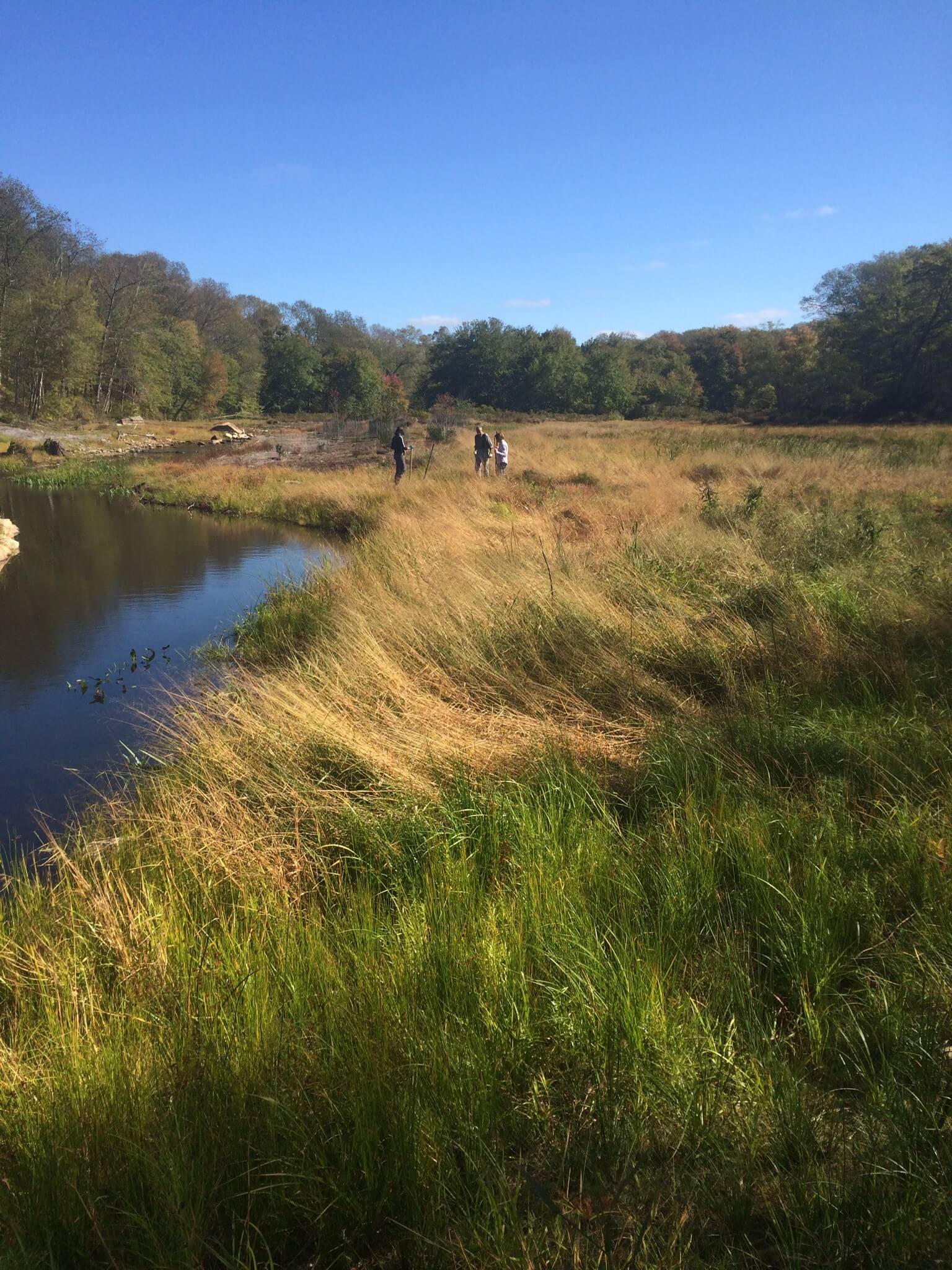
stream, it will be a dry streambed (NO!!!! Water does not emanate from the dam. Streamflow is based on rainfall and the same amount of water will flow down the stream as it did before). Often it is just a case of not liking change. The dam has been there for nearly 200 years and it is all the community has known. People get sentimental and remember it as the site of their first kiss, their first sunfish, or learning how to skate. These understandable feelings don’t negate the value of the dam owner trying to do the right thing to restore a natural, free-flowing, healthy stream.
A New Approach
If a dam is unsafe, the CT DEEP can order the owner to repair or remove it. But in most cases, dam removals have been voluntary projects between the owner and a non-profit conservation group, including Save the Sound, The Nature Conservancy, and conservation districts. The process includes fund-raising, mostly by applying for grants. A qualified engineer must be hired to design the removal and State and federal permits need to be secured. Often, those permits require consultation with the State Historical Preservation office, Tribal offices, and the DEEP in respect to endangered species. Once designed and permitted, an experienced contractor must be hired to remove the dam, which does not involve dynamite and normally takes place in low-flow summer months.

More could be said about the safety hazard of old dams but the prime interest of conservation organizations like the Rockfall Foundation is to restore ecological integrity to our streams. It’s not just about the fish but also the myriad of species that rely on fish such as otters, eagles, kingfishers and egrets as well as mussels, aquatic invertebrates, crayfish and other species that need clean, free-flowing streams in their natural state. Dam owners who want to discuss options should contact one of the conservation groups, the DEEP… or me, at sgephard@gmail.com.
Steve Gephard lives in Deep River and worked for the CT DEEP for 42 years as a fish biologist. After retiring from the DEEP, he works as a consultant and now helps Towns, land trusts, and individuals address their dam problems.